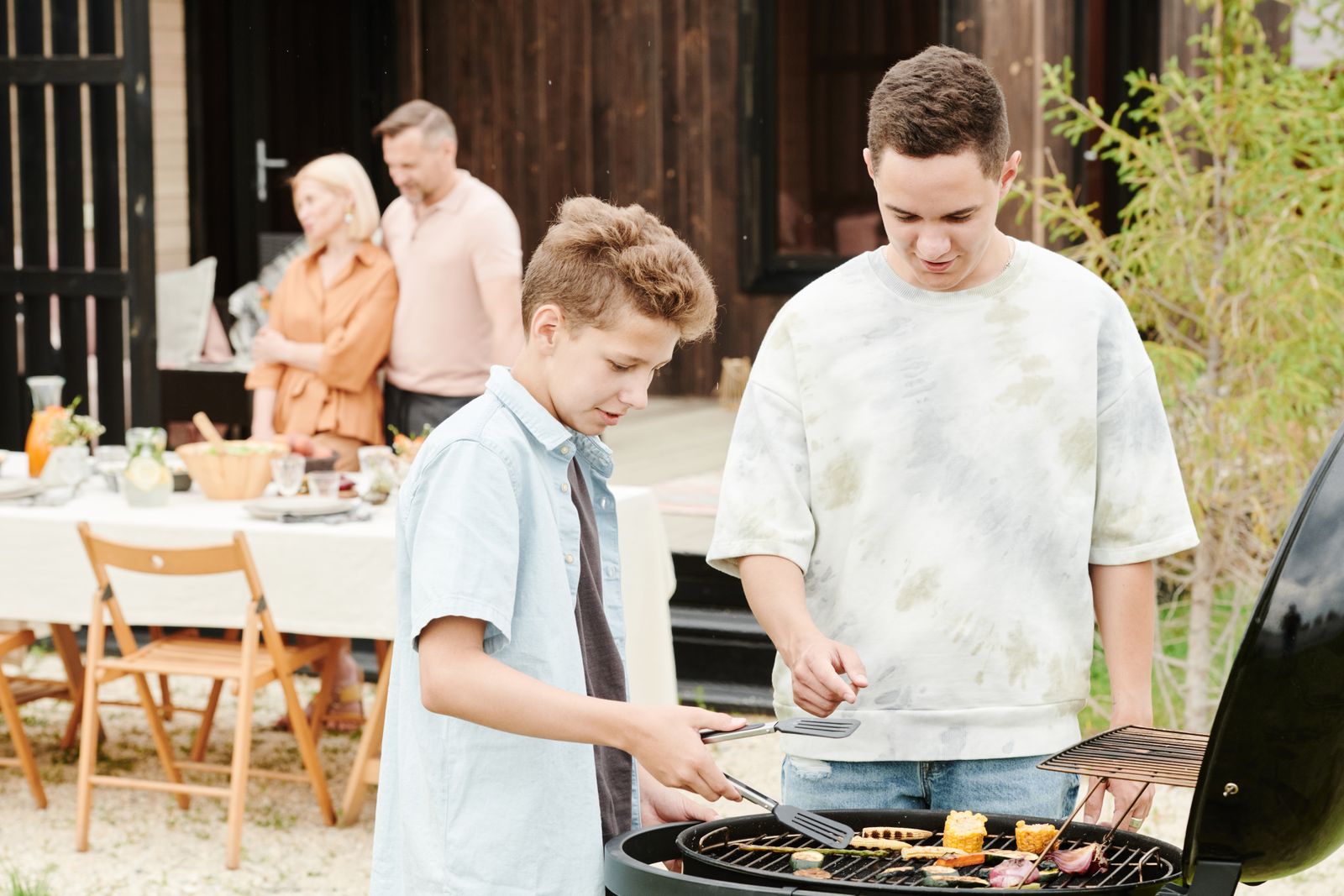
Planning food for 150 people starts with confirmed attendance, not invitations sent. This baseline assumes a mixed-age family crowd, buffet service, one main meal, and modest extra capacity. It is a planning example rather than a catering guarantee: appetite, menu, serving style, weather, event length, and whether food is bone-in can materially change what you need.
A working quantity baseline
For 150 confirmed guests, begin with about 138 adult-size meal equivalents after allowing smaller portions for some children. A workable starting point is approximately 70 pounds of cooked protein in total, 105 pounds of prepared sides across three choices, 180 dessert portions, and 24 gallons of nonalcoholic beverages plus freely available water. Do not buy 70 pounds of every meat. Divide the total across the proteins on your menu.
Enter your actual adult and child count in the GatherKin food quantity calculator, then adjust for known family habits. Raw purchase weight will be higher than cooked serving weight and varies with bones, fat, trimming, and moisture loss; confirm yields with the caterer, butcher, or a small test cook.
Turn the estimate into a menu
Choose two proteins, three substantial sides, bread, condiments, dessert, water, and two other drink choices. Giving every guest six or seven main-dish options increases leftovers and makes allergy labeling harder. For a cookout, one grilled meat, one second protein, a filling meatless option, beans or greens, a starch, and a cool side creates useful variety without multiplying every purchase.
Reserve a labeled portion for vegetarian meals and confirmed dietary needs before opening the buffet. Keep ingredient notes with the serving team and use separate utensils where cross-contact matters. The soul food family reunion menu guide provides a complete example.
Service plan for this crowd size
For 150 people, plan on three timed serving stations and assign a kitchen lead, four cooks, two runners, and four serving leads. Portion the first wave instead of placing every tray out at once. Refill in smaller batches so hot food stays hot, cold food stays cold, and the final families receive the same choices as the first.
Label each pan, assign a named owner, record its arrival time, and keep backup food refrigerated or properly hot-held until needed. Count plates, bowls, cups, napkins, forks, serving tools, foil, gloves, trash bags, and take-home containers separately from the food estimate.
Build food safety into the plan
Use a food thermometer rather than color or cook time alone. The USDA safe-temperature chart lists 145°F plus a three-minute rest for whole cuts of beef, pork, veal, and lamb; 160°F for ground meats; and 165°F for poultry. Keep raw meat and its tools separate from ready-to-eat food.
USDA outdoor guidance says perishable food should not remain in the 40°F–140°F danger zone for more than two hours, or more than one hour when the temperature is above 90°F. Assign someone to monitor time and temperature, replenish small trays, and discard food that exceeds the safe window.
Frequently asked questions
Is this enough food for exactly 150 people?
It is a starting point for one buffet meal. Use confirmed adult and child counts, test portions, menu yields, event length, and family preferences before purchasing.
Should quantities use raw or cooked meat weight?
The baseline uses cooked serving weight. Ask the supplier or caterer for a raw-to-cooked yield for each cut before converting it into a shopping quantity.
How much extra food should we buy?
Build a modest, intentional buffer around uncertain attendance and popular dishes instead of adding the same large percentage to every item.