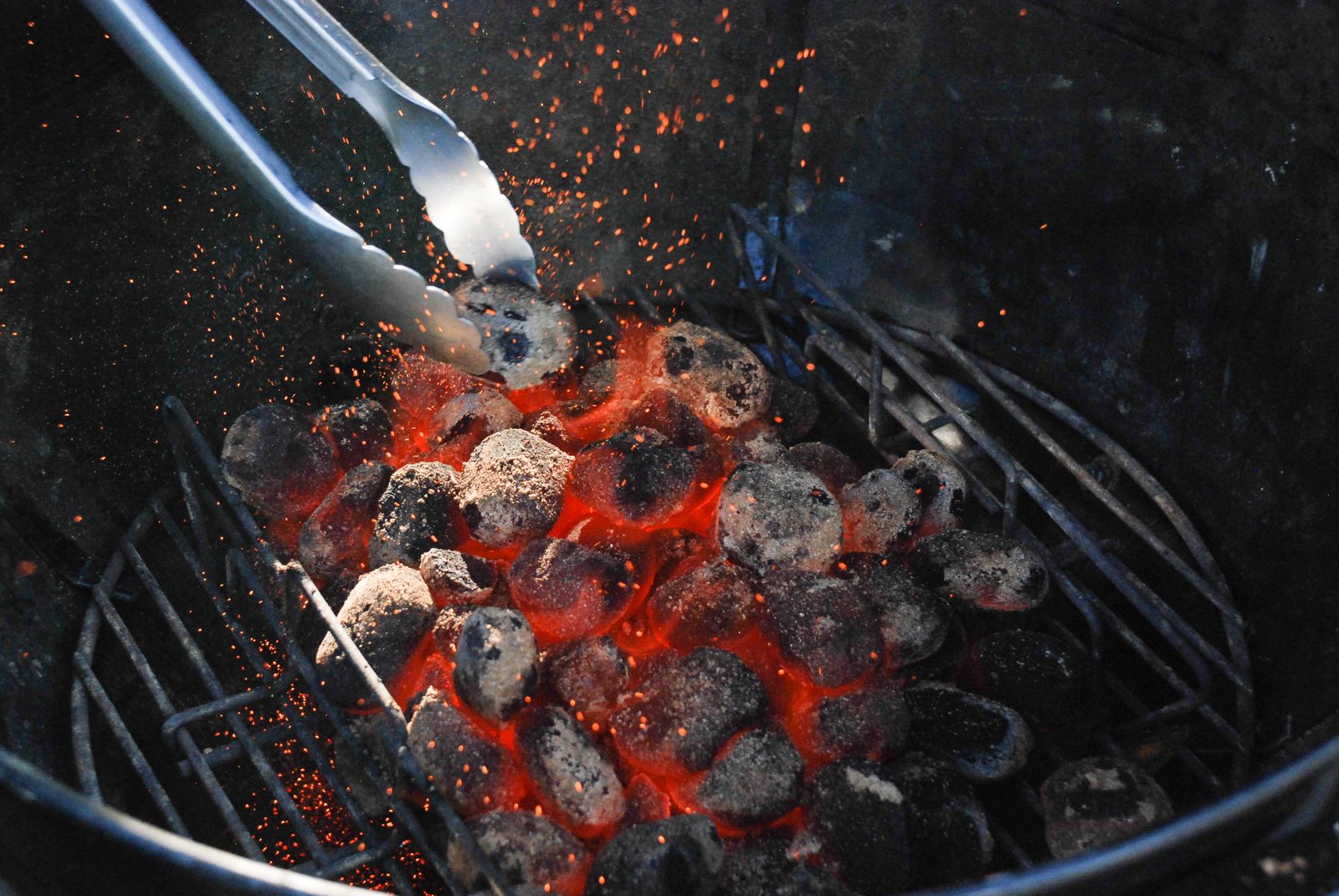
There is no trustworthy universal bag-per-guest formula for charcoal. Fuel use depends on grill size, briquette or lump fuel, target heat, wind, lid use, cook time, and how many separate batches the menu requires. A short equipment test produces a better answer than a crowd-size shortcut.
Use a grill-load formula
List every grill and identify the manufacturer's recommended fuel per load. Estimate how many full or partial loads each grill needs, multiply loads by fuel per load, then add a controlled reserve of roughly 20 percent for delays or weather. Example: if the grill uses eight pounds per load and the plan requires three loads, 8 × 3 × 1.2 equals 28.8 pounds; round to available bag sizes without opening the reserve early.
Record the actual result after the cookout so next year's committee inherits evidence rather than another guess.
Build a cooking sequence
Group foods by temperature and timing. Start items with long, steady cook times first; schedule quick burgers, hot dogs, vegetables, or reheating afterward when appropriate. Avoid lighting every grill at once unless the serving schedule requires it. A written sequence reduces fuel, crowding, and the temptation to serve undercooked food.
Use the meat quantity guide to finalize the menu before calculating loads.
Assign fuel and fire responsibilities
Name one fire lead, a backup, and the adult permitted to control lighters and starter equipment. Keep charcoal dry and away from children, foot traffic, vehicles, tents, and combustible materials. Confirm that the venue permits charcoal grills and learn its ash-disposal rules before purchasing fuel.
Never use a grill indoors or in an enclosed space. Keep appropriate fire-control equipment nearby and follow the grill, fuel, venue, and local fire-safety instructions.
Do not let fuel planning replace food safety
Use a food thermometer at every grill station. The USDA chart lists 160°F for ground meats and 165°F for poultry. Whole cuts of beef, pork, veal, and lamb require 145°F and a three-minute rest.
Move finished food into safe holding or service promptly. Perishable food should not stay in the 40°F–140°F danger zone beyond two hours, or one hour when outdoor temperature exceeds 90°F.
Frequently asked questions
How many bags of charcoal do I need?
Calculate grill loads using the equipment manufacturer's fuel guidance, then add a controlled reserve and round to the bag size you can buy.
Should we open all charcoal bags at the start?
No. Keep the reserve sealed and dry unless the fire lead determines it is needed.
Can the venue restrict charcoal?
Yes. Confirm grill type, placement, permits, fire equipment, and ash disposal with the venue and local rules.