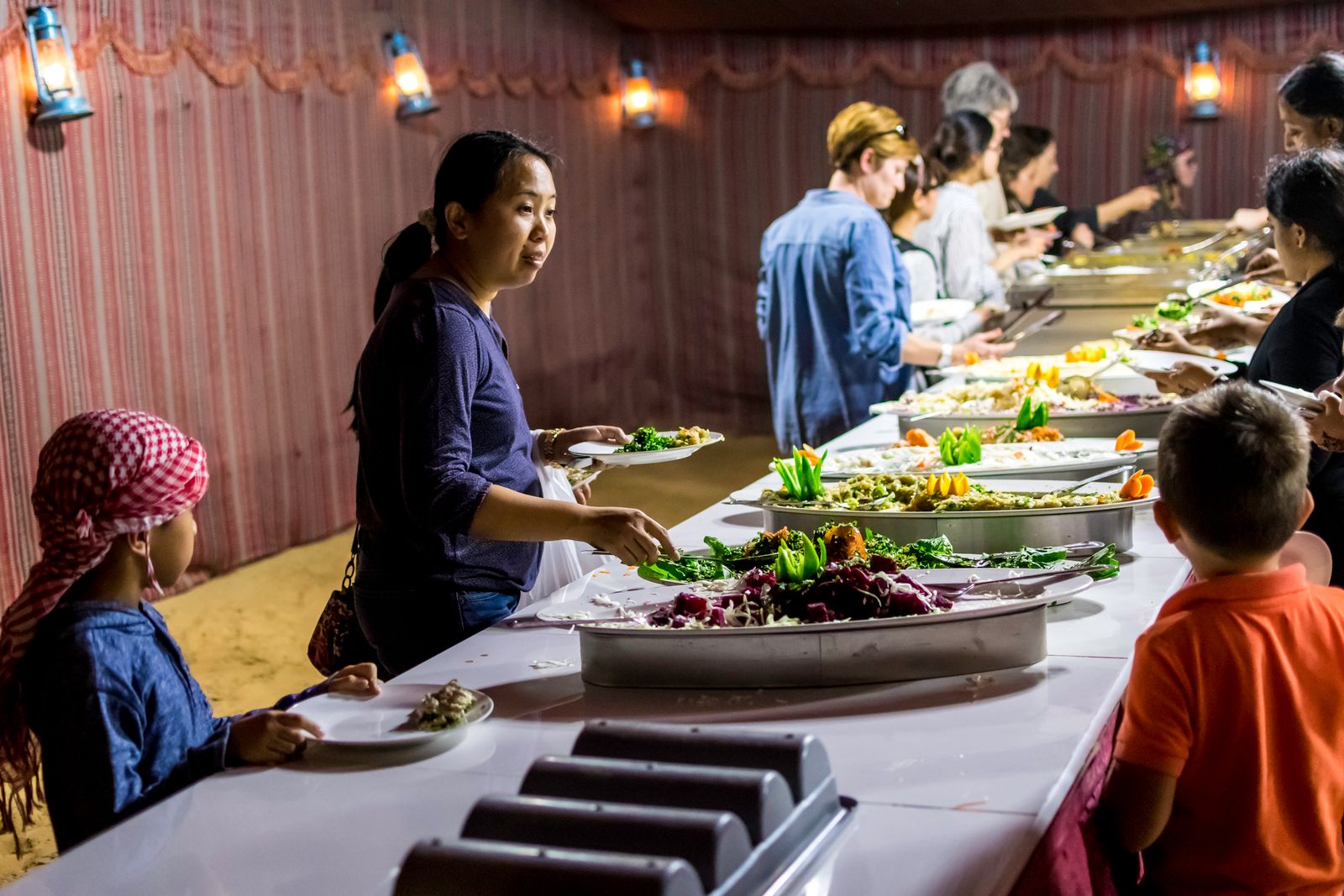
For one buffet-style family reunion meal serving 100 confirmed guests, start with 40 to 50 pounds of total cooked boneless protein, three sides at about 25 pounds each, 150 buns or rolls, 250 individual drinks, 120 dessert servings, and 100 to 150 pounds of ice. These are planning ranges, not guarantees. Adjust for children, serving style, weather, menu variety, dietary needs, event length, and the yields provided by your caterer or recipes.
Quick answer: food quantities for 100 guests
| Category | Starting quantity for 100 | Planning note |
|---|---|---|
| Cooked boneless protein | 40-50 lb total | Use the lower end with several proteins and substantial sides. |
| Bone-in chicken | 125-150 pieces | Count mixed pieces, not whole birds. |
| Burgers and hot dogs | 150-175 total | Split based on the age mix and other proteins. |
| Each prepared side | 22-28 lb | Offer two or three sides; popular dishes may need more. |
| Buns or rolls | 140-150 | Match bun types to the menu and keep extras sealed. |
| Individual 12 oz drinks | 250-300 | Provide plenty of water; hot weather increases demand. |
| Dessert | 120-150 servings | Smaller portions work when several desserts are offered. |
| Ice | 100-150 lb | Separate food-safety ice from beverage ice. |
| Plates, cups, napkins | 125-150 each | Increase for all-day events or multiple meals. |
This baseline assumes one main meal, buffet service, a mixed-age crowd, and a reasonably accurate RSVP count. Enter your actual adult and child totals in the free GatherKin food quantity calculator before purchasing.
Example barbecue menu for 100 people
Proteins: 25 pounds cooked pulled pork, 60 chicken pieces, and 60 hot dogs
Sides: 25 pounds macaroni and cheese, 25 pounds baked beans, and 22 pounds slaw or salad
Bread: 150 buns or rolls
Drinks: 125 waters, 75 sodas, and 75 cups of tea or lemonade
Dessert: 120 portions divided among cake, cookies, cobbler, or fruit
Service: 150 plates, 150 cups, 250 napkins, serving utensils, foil, gloves, trash bags, and labeled storage containers
Treat this as a starting configuration, not a caterer order. If all three proteins are available to every guest, reduce individual protein quantities or expect leftovers. If only one protein is served, confirm its cooked yield and portion size with the cook or caterer.
Calculate from confirmed households, not invitations
An invitation list of 140 does not justify food for 140 when only 100 people have confirmed. Use the current household registration count, separate adults and teenagers from younger children, and set a final headcount deadline before ordering perishables. Track attending, unable to attend, maybe, and no response separately.
For uncertain attendance, keep shelf-stable backup items rather than increasing every expensive menu category. Extra water, sealed buns, chips, disposable supplies, and freezer-safe proteins are easier to reuse than oversized trays of prepared sides.
Adjust for children, seconds, and multiple meals
- Count most teenagers as adults for portion planning.
- For younger children, estimate roughly one-half to two-thirds of an adult portion.
- Add 5% to 10% when the headcount is reliable and the meal has several choices.
- Use a larger contingency only when attendance is genuinely open or uncertain.
- Plan each additional meal separately; do not multiply a dinner list blindly for breakfast or snacks.
- Reduce each main dish when guests can choose from several proteins.
The committee should record what the reunion fee covers and whether family members are also bringing dishes. A structured potluck assignment list prevents duplicate desserts and missing essentials.
Assign people, equipment, and serving times
Food quantities solve only part of the problem. Assign a food lead, purchasing owner, grill team, serving team, temperature checker, replenishment runner, and cleanup lead. Write down when food arrives, where it is stored, when cooking begins, and who decides that a tray should be replaced.
For 100 guests, consider two serving lines with the same layout when space permits. Put plates first, utensils and napkins last, and beverages away from the food line so refills do not block meal service. Label dishes and common allergens clearly.
Keep a large outdoor meal safe
The USDA Food Safety and Inspection Service advises keeping cold food at or below 40°F and hot food at or above 140°F. Perishable food should not remain in the 40°F to 140°F range for more than two hours, or more than one hour when the outdoor temperature is above 90°F. Use food thermometers and follow the agency's current food-safety guidance.
Use separate coolers for raw proteins and ready-to-eat foods when possible. Do not use beverage ice to chill raw ingredients. Replace small trays from protected hot or cold storage instead of placing the full supply on the buffet at once.
Turn the shopping list into household assignments
Once quantities are final, split the work into specific items: "four 16-pound bags of charcoal" is more useful than "bring charcoal." Record the owner, quantity, delivery time, storage location, and completion status. GatherKin reunion organizers can connect item assignments to registered households so families can see and check off what they agreed to bring.
Frequently asked questions
How many pounds of meat do I need for 100 people?
For a mixed buffet with substantial sides, start around 40 to 50 pounds of total cooked boneless protein. Adjust downward when offering several proteins and upward for a meat-centered menu, large appetites, or limited sides.
How many burgers and hot dogs do I need for 100 people?
When burgers and hot dogs are the main choices, begin with about 150 to 175 total pieces. Change the split based on children, dietary preferences, and whether chicken or another protein is also served.
How many side dishes do I need for 100 guests?
Offer two or three sides and start with roughly 22 to 28 pounds of each prepared side. Increase especially popular dishes and reduce portions when the menu includes many choices.
How many drinks should I buy for 100 people?
Plan roughly 250 to 300 twelve-ounce drink servings for one meal, with water making up a substantial share. Increase the amount for heat, physical activity, alcohol service, or a long event.
How much extra food should I prepare for a family reunion?
With confirmed household registrations, a 5% to 10% buffer is a practical starting point. Larger buffers may be needed for an open invitation, but they should not replace RSVP tracking.